2026-09-05 · Robert Kline
Checking Refrigerant In Units Exposed To Intense Summer Sun
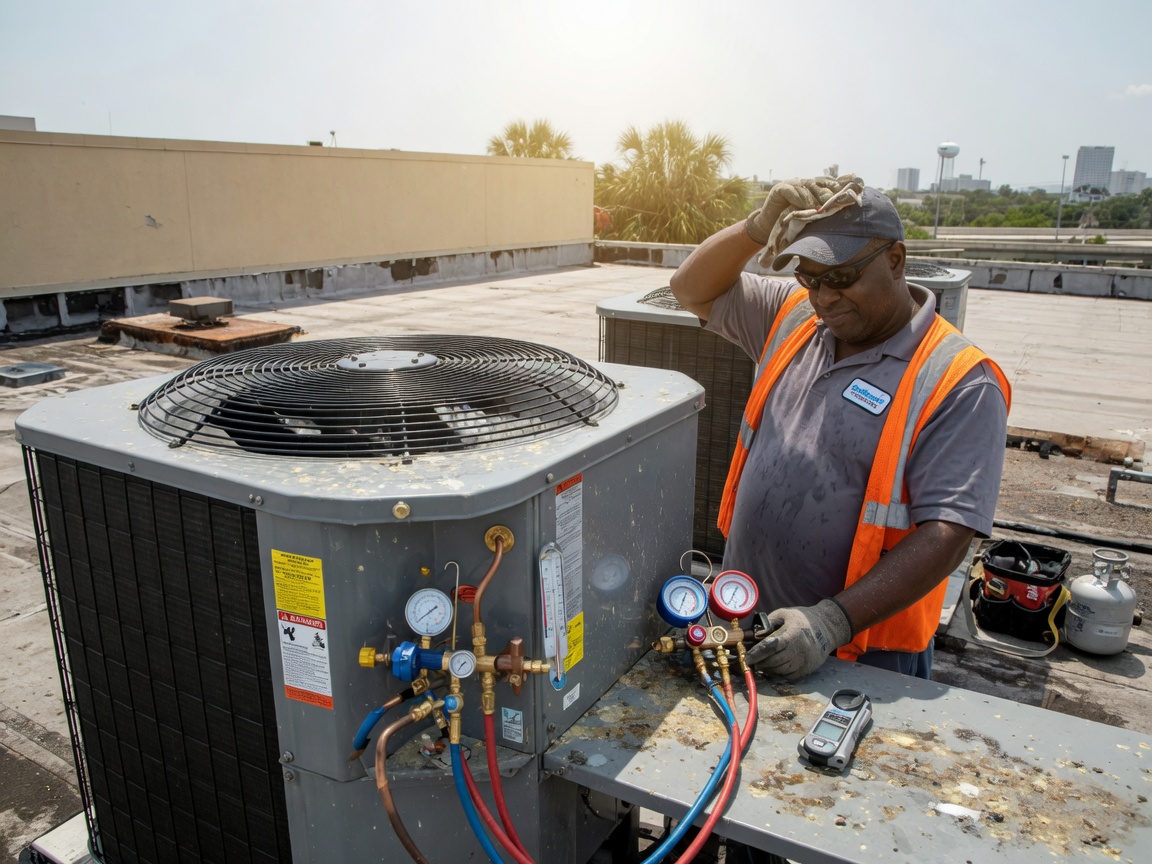
Checking refrigerant in air conditioning units exposed to intense summer sun in Jacksonville requires an annual inspection before June, since Duval County's hot humid conditions accelerate pressure changes and potential leaks on rooftops in areas like Arlington and Mandarin.
Impact of Jacksonville Summers on Refrigerant Systems
Jacksonville's humid subtropical climate brings consistent highs above 90 degrees with high humidity from May through September, which increases compressor workload on units installed in full sun. Homes in Riverside and San Marco often have older rooftops with limited shade, leading to higher head pressures that can mask low refrigerant until the system short-cycles. The St. Johns River corridor adds extra moisture that promotes corrosion on outdoor coils, shortening the time before a small leak becomes noticeable. Systems near EverBank Field or Downtown Jacksonville face additional radiant heat from surrounding pavement, pushing refrigerant lines into temperature ranges that stress seals and valves. Regular monitoring prevents sudden failures during peak afternoon loads when indoor temperatures climb fastest.
Signs Your Unit May Need Refrigerant Checked
Watch for ice forming on the evaporator coil even when outdoor temperatures exceed 85 degrees, a common issue in Springfield and Avondale homes with south-facing units. Longer run times without reaching the set temperature, especially after 2pm, often point to low refrigerant rather than dirty filters alone. Listen for hissing near the condenser on units installed at 4623 Lambing Rd addresses or similar 1960s-1980s housing stock where line sets have aged. Higher humidity levels inside the home despite the AC running indicate the system cannot absorb enough heat, which ties directly to refrigerant charge in sun-exposed setups. These symptoms appear earlier in Mandarin and Arlington than in shaded inland spots due to direct solar gain on the outdoor unit.
Practical Steps for Checking Refrigerant
Begin with a visual inspection of the outdoor unit during morning hours when ambient temperatures are lower, confirming no obvious oil stains around fittings. Connect manifold gauges only after the system has run for at least 15 minutes to stabilize pressures, comparing readings against the manufacturer's chart for the specific R-410A or R-22 charge. Measure superheat and subcooling at the service ports while noting the exact outdoor temperature, because Jacksonville's afternoon humidity can skew numbers by 3-5 degrees if taken during peak heat. Document the values and repeat the check after any major power event, referencing guidance in Handling AC Repairs After JEA Power Outages. Never add refrigerant without locating and repairing the leak first, as topping off masks problems that worsen in the next heat wave.
When to Schedule Professional Service
Contact a technician if superheat readings fall outside the 8-12 degree range or if subcooling drops below manufacturer specs during sustained 90-degree days. Units serving homes near Kingsley Plantation or along the river often need earlier attention because salt air accelerates corrosion on exposed copper lines. Schedule checks through our HVAC Maintenance page before the first heat advisory, allowing time to address issues without emergency rates. Avoid attempting DIY recharges, which can introduce moisture and void equipment warranties in Florida's strict humidity environment. Professional verification ensures the correct charge for your specific model while accounting for the longer cooling seasons common in Duval County.