2026-10-28 · Robert Ellis
Preparing Your AC For Atlantic Hurricane Season In Jacksonville
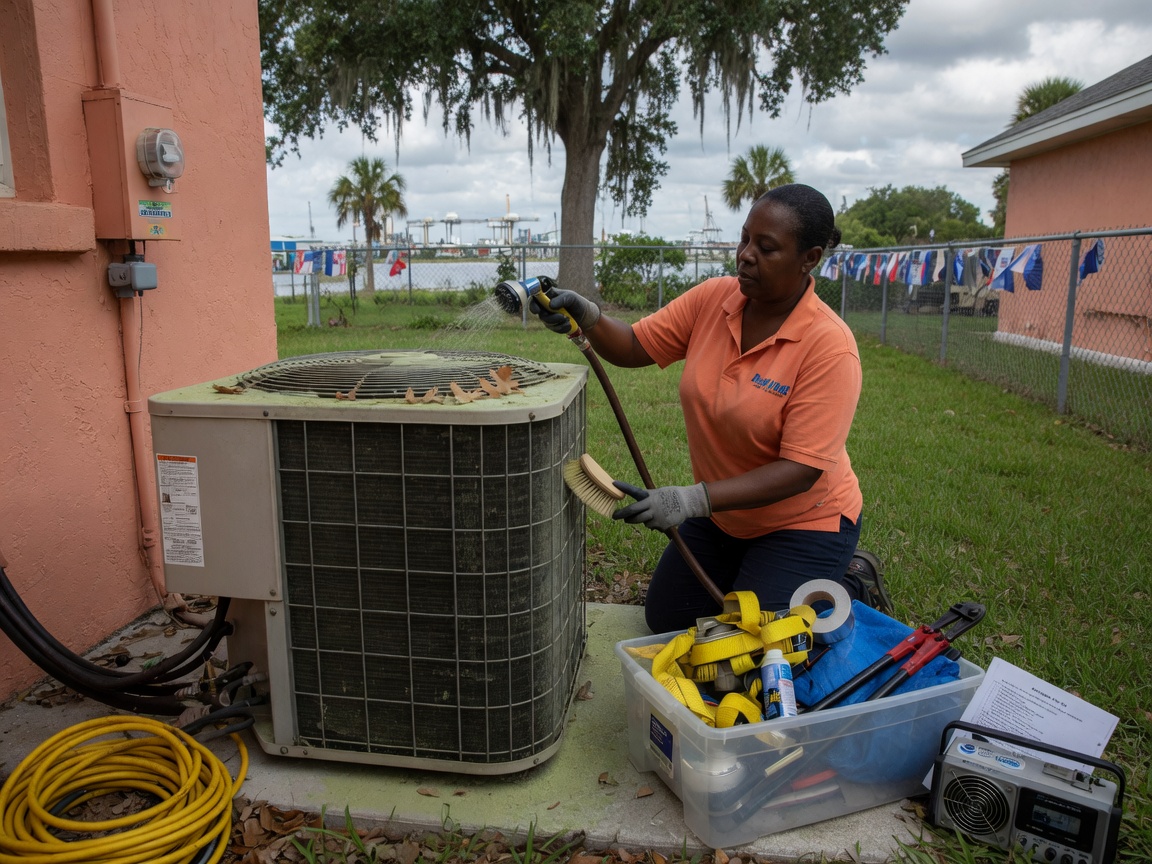
Jacksonville residents should begin AC preparation for Atlantic hurricane season by securing outdoor condensers and clearing drainage lines at least four weeks before peak storm months. This timing aligns with the humid subtropical climate where hot summers often bring early tropical systems that test equipment in neighborhoods like Riverside and San Marco.
Inspecting Outdoor Units Near the St. Johns River
Walk around your property in areas such as Avondale or Springfield and look for loose mounting pads or corroded brackets that river humidity accelerates. In Duval County homes built before 1990, many condensers sit on older concrete slabs that shift during heavy rains, leaving units vulnerable to tipping. Check refrigerant lines for insulation gaps that allow moisture intrusion and inspect the disconnect box for rust common near the water. Clear at least two feet of space around the unit so technicians can access it quickly after a storm. Document any existing damage with photos before hurricane season starts so you have records if JEA power fluctuations occur later.
Securing Equipment Against High Winds in Downtown and Mandarin
High winds in Jacksonville often exceed 60 mph during tropical storms, so strap condensers with hurricane-rated brackets rated for 150 mph gusts rather than relying on factory feet alone. Homeowners in Downtown Jacksonville and Mandarin frequently deal with flying debris from live oaks, so install protective cages or relocate units to the leeward side of the house when possible. Verify that disconnect switches remain accessible and label them clearly for emergency crews. In Arlington and Springfield, where older homes sit closer together, coordinate with neighbors to ensure shared fences do not block airflow once straps are installed. These steps reduce the chance of units becoming projectiles that damage roofs or neighboring properties.
Maintaining Drainage and Power Readiness
Jacksonville's frequent downpours during hurricane season clog condensate drains with pollen and oak leaves, leading to indoor water damage when systems restart. Flush lines monthly with a vinegar solution and install a safety switch that shuts the system off if water backs up. After JEA outages common in storms, handling AC repairs after JEA power outages becomes critical because compressors can short-cycle when power returns. Keep a surge protector rated for HVAC equipment on the disconnect and test it annually. Residents in Orange Park and Atlantic Beach should also elevate low-lying units on risers to limit flood exposure from the St. Johns River tributaries.
Scheduling Professional Checks Before Peak Season
Contact a HVAC maintenance provider in Jacksonville during April or May to perform a full pre-season tune-up that includes capacitor testing and coil cleaning. Technicians familiar with Duval County conditions can spot corrosion patterns specific to salt air reaching inland from Neptune Beach. Schedule the visit for a weekday between 8am and 6pm or Saturday 9am to 2pm so the crew can complete work without rushing. Ask them to confirm that your thermostat communicates properly with the outdoor unit, since many Jacksonville homes now use smart controls that fail during voltage drops. This service visit also lets you discuss emergency HVAC service options should a storm damage your system mid-season.