2026-09-05 · Robert Kline
Replacing Air Filters In Areas With Heavy Pine Pollen
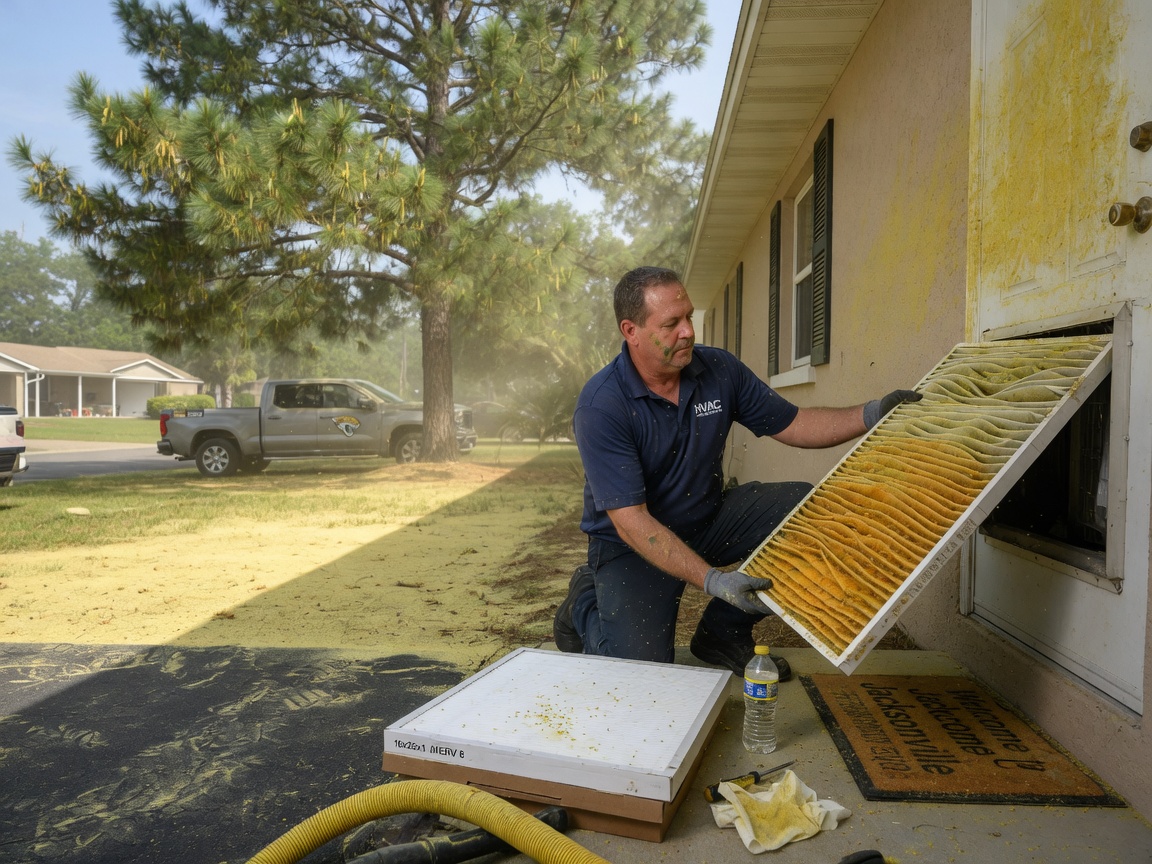
In Jacksonville's humid subtropical climate, replace air filters every 4–6 weeks during peak pine pollen season from late February through April rather than the standard 90 days. Pine pollen from longleaf and slash pines that line streets in Arlington, Mandarin, and Springfield coats filters quickly, especially when combined with the area's high humidity that turns trapped particles into a sticky layer. Homes in older neighborhoods like Avondale and Downtown Jacksonville often run systems harder year-round, so shorter intervals prevent restricted airflow that raises energy use and strains equipment.
Why Pine Pollen Hits Filters Hard in Duval County
Jacksonville's location along the St. Johns River creates a perfect setting for heavy pollen loads that travel into neighborhoods such as San Marco and Riverside. The mild winters allow pollen release to start earlier than in northern states, while hot, humid summers keep windows closed and HVAC systems running continuously. Pollen grains are small enough to pass through standard filters yet large enough to build up fast on the intake side, reducing efficiency in single-story ranch homes common throughout the county. Residents in nearby Orange Park and Atlantic Beach report the same rapid clogging because prevailing winds carry pollen across the water. Checking filters weekly during spring reveals the difference compared with fall or winter months when loads drop.
Selecting Filters for Local Pollen Conditions
Choose MERV 8–11 pleated filters for most Jacksonville homes to capture pine pollen without restricting airflow too much in older ductwork found in Springfield and Avondale properties. Higher MERV ratings work better in newer construction near EverBank Field but can overload systems in pre-1980 houses if not changed on schedule. Electrostatic options add a small static charge that holds pollen longer in the humid air typical of Mandarin and Arlington. Keep a supply on hand at the start of February because local stores run low once pollen counts spike. Pair this choice with regular HVAC maintenance to keep the entire system balanced against the county's moisture levels.
Replacement Steps That Account for Jacksonville Humidity
Turn the system off at the thermostat before opening the filter compartment to avoid pulling loose pollen into the blower. Slide the old filter out slowly over a trash bag so captured pollen does not scatter across floors in homes near the Cummer Museum or Kingsley Plantation. Note the arrow direction on the new filter frame and insert it the same way so air flows toward the evaporator coil. Wipe the compartment edges with a damp cloth to remove any residue that humidity can turn into mold food. Run the system for five minutes afterward and check for unusual noise that signals restricted airflow. Homeowners in Neptune Beach follow the same sequence because coastal salt air mixes with pollen and accelerates buildup on return grilles.
When to Shorten the Interval Further
Watch for reduced airflow from vents or higher utility bills as early signs that pollen has overwhelmed the filter in Riverside or Downtown Jacksonville homes. During especially heavy pollen years, filters in multi-story houses near the St. Johns River may need changing every three weeks. Dark gray or brown discoloration on the filter face confirms it is time regardless of the calendar. Link this habit to indoor air quality improvement services when family members notice increased allergy symptoms indoors. Readers dealing with related moisture issues can continue with Preventing Mold Growth Inside Ducts From Local Moisture for deeper duct protection.