2026-09-05 · Robert Kline
Preventing Mold Growth Inside Ducts From Local Moisture
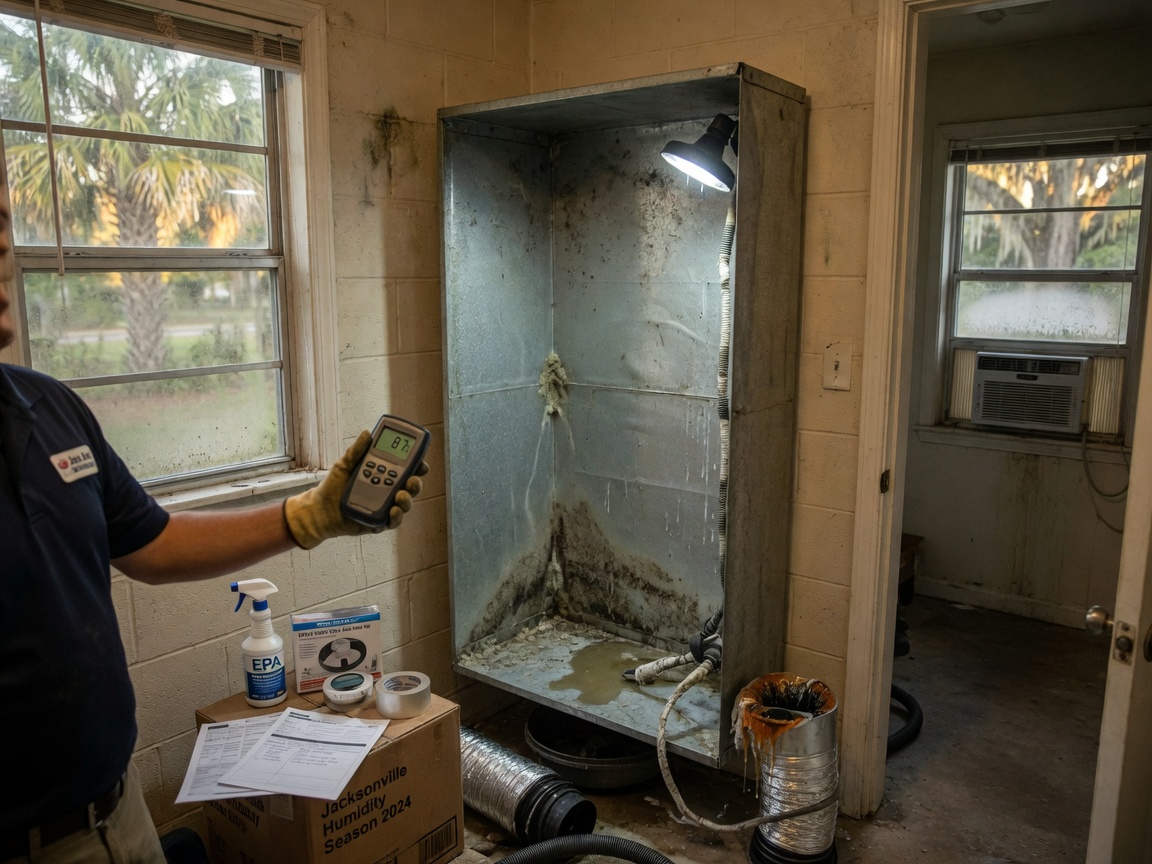
In Jacksonville's humid subtropical climate, mold colonies can begin forming inside ducts within 24-48 hours once relative humidity stays above 60 percent for more than a day, yet consistent dehumidification, sealed duct joints, and scheduled inspections keep growth from starting in homes across Duval County.
Local Climate and Moisture Pathways
Jacksonville's hot summers push afternoon humidity levels above 70 percent for weeks at a time while mild winters still deliver frequent rain from the St. Johns River. Homes in Riverside and San Marco sit close to the water table, so crawl spaces stay damp year-round and supply constant vapor that enters return ducts through unsealed joints. Older housing stock in Springfield and Avondale often uses flex duct runs installed before modern vapor barriers, allowing condensation to form on metal elbows during the first cool night after a humid day. These conditions differ from inland neighborhoods like Mandarin where afternoon thunderstorms dump moisture that lingers in attic insulation and later migrates into supply lines. Understanding these micro-climates helps technicians target the exact entry points rather than applying generic fixes.
Common Entry Points in Duval County Homes
Return plenums in single-story homes near Arlington frequently pull air from laundry rooms where clothes dryers vent warm moist air. In two-story houses in Avondale, second-floor bathrooms without proper exhaust fans push steam into ceiling returns that run through unconditioned attics. The combination of high groundwater and sandy soil around the St. Johns River also raises relative humidity under slab foundations, forcing moisture upward through floor registers in Downtown Jacksonville properties. Technicians routinely find mold colonies starting at the first elbow after the air handler because that location experiences the greatest temperature swing when the system cycles on during peak summer loads.
Practical Prevention Steps
Keep indoor relative humidity between 45 and 55 percent by setting the thermostat fan to run 5-10 minutes after each cooling cycle. Replace pleated filters every 30 days during summer rather than the standard 90-day interval because pollen and river moisture load filters faster here. Seal all duct joints with mastic rather than tape, especially in attics where temperatures reach 120 degrees. Schedule professional cleaning of the evaporator coil and drain pan twice a year to remove the biofilm that feeds mold spores. Homeowners in neighborhoods like Mandarin benefit from adding a whole-home dehumidifier tied to the existing air handler instead of relying solely on the AC to manage latent load. These steps address the specific moisture sources created by Jacksonville's river proximity and subtropical weather patterns.
When to Inspect and Maintain
Schedule a duct inspection each spring before humidity climbs and again in late fall after hurricane season when standing water around foundations can increase. Look for dark staining around registers in rooms that face the prevailing southeast winds, which carry extra moisture from the Atlantic. If musty odors appear when the system first starts in the morning, shut the unit down and call for service rather than running it longer. Pair these checks with the practices outlined in managing high humidity levels with home cooling systems to maintain consistent conditions across the entire duct system. Regular attention prevents the need for more invasive remediation later.
Related Services for Ongoing Control
Homeowners seeking deeper humidity management can review options for indoor air quality improvement that include UV lights and dedicated dehumidifiers sized for Duval County loads. When existing ductwork shows visible growth, air duct cleaning removes the accumulated material before new mold colonies establish. These targeted services complement the daily habits that keep moisture from entering the system in the first place.