2026-09-05 · Robert Kline
What To Check After Flooding Near The St Johns River
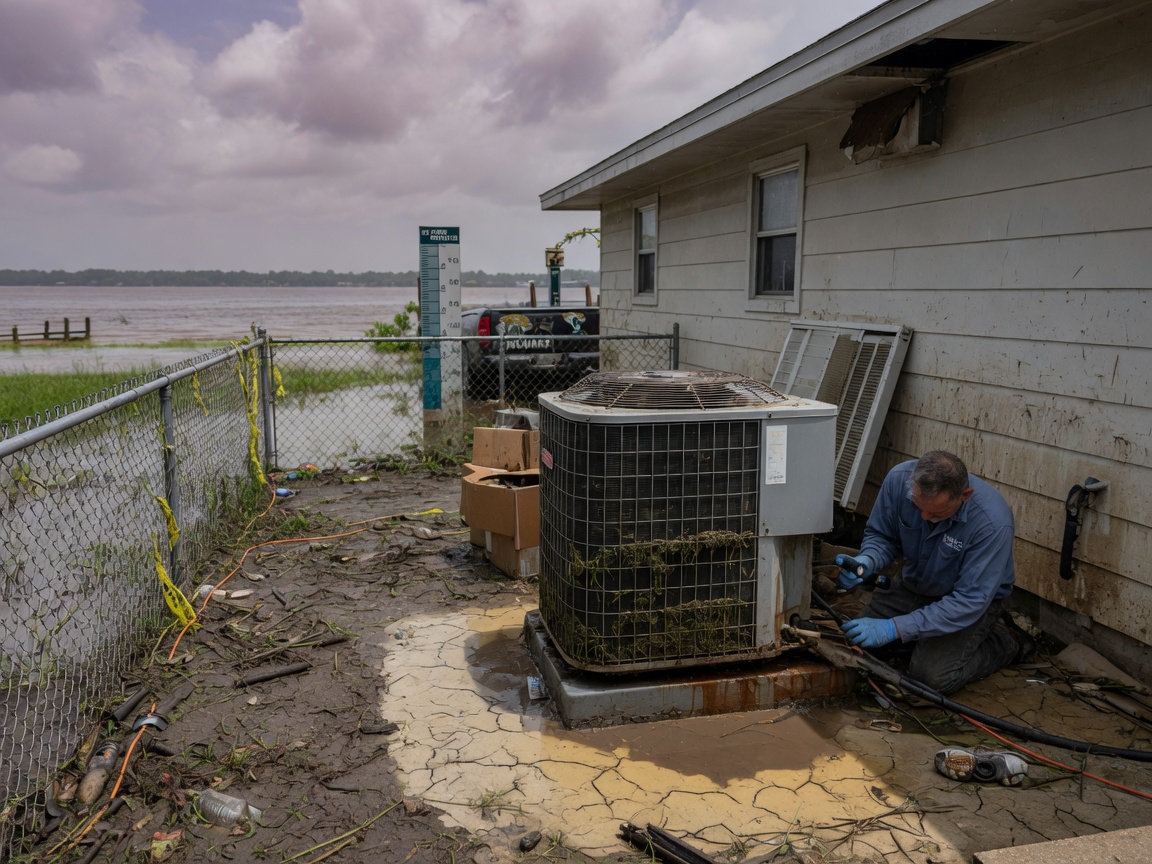
After flooding near the St. Johns River, begin by shutting off power to the HVAC system at the breaker and examining the outdoor unit, indoor air handler, and all ductwork for water intrusion before restoring electricity. In neighborhoods such as Riverside and San Marco, older homes often have ground-level equipment that sits directly in flood paths along the river.
Inspecting Outdoor Units and Condensers
Units placed in low-lying yards near the St. Johns River commonly collect silt and debris after flood events. Remove any mud from the condenser coils and check the base for shifted pads or eroded soil that could tilt the unit. In Arlington and Mandarin, where many homes sit on slightly higher ground but still drain toward the river, standing water can short electrical connections inside the disconnect box. Look for corrosion on contactors and capacitors. If the unit has been submerged above the base, do not restart it until a technician verifies the compressor windings remain dry. The humid subtropical conditions in Duval County accelerate rust once moisture sits inside metal cabinets.
Checking Indoor Air Handlers and Ductwork
Air handlers located in attics or closets in Springfield and Avondale homes often pull water through return ducts when nearby streets flood. Open the access panel and inspect the blower wheel and evaporator coil for sediment. Wet insulation around duct joints in crawl spaces must be removed because the mild winters here do not dry materials quickly enough. Measure static pressure after cleaning to confirm airflow has returned to normal levels. Homes near EverBank Field and the Cummer Museum frequently have flex duct runs that trap water in low spots, creating hidden mold colonies within days.
Addressing Electrical and Control Issues
Floodwater carries salts that corrode low-voltage wiring connected to thermostats and zone dampers. Test every 24-volt connection with a multimeter rather than assuming breakers alone protect the board. In areas like Orange Park and Atlantic Beach that share the same riverine flooding patterns, homeowners report repeated control board failures when water reaches the furnace compartment. Replace any relay that shows discoloration. Never attempt to dry components with a household hair dryer; residual moisture in the control transformer will cause immediate failure once power returns.
Managing Post-Flood Humidity and Mold Risks
The region's high humidity levels mean drywall and duct insulation can support mold growth within 48 hours after water recedes. Run a dehumidifier tied into the HVAC return until indoor readings stay below 55 percent. Managing High Humidity Levels With Home Cooling Systems explains how to set up temporary bypasses that keep the system running safely. Replace pleated filters daily for the first week because river sediment clogs media faster than pine pollen ever does.
Scheduling Professional Follow-Up Service
Once visible water is gone, schedule a full HVAC Maintenance visit to verify refrigerant levels, clean condensate drains, and confirm the heat pump reversing valve still functions. For immediate safety concerns after hours, Emergency HVAC Service crews familiar with Duval County flood zones can isolate damaged sections. Document every step with photos before any cleanup begins so insurance adjusters see the actual water line on equipment located near the St. Johns River.
Long-Term System Protection Steps
Raise outdoor units on composite pads at least 18 inches above grade in flood-prone lots along the river. Seal all low-side duct penetrations with mastic rather than tape that fails after repeated wetting. In nearby Neptune Beach and Atlantic Beach properties, installing float switches on condensate lines prevents secondary water damage when heavy rains follow a flood. These targeted changes reduce repeat service calls during the next high-water event without requiring full system replacement.