2026-09-05 · Robert Kline
Cleaning Coils On Units Near The Intracoastal Waterway
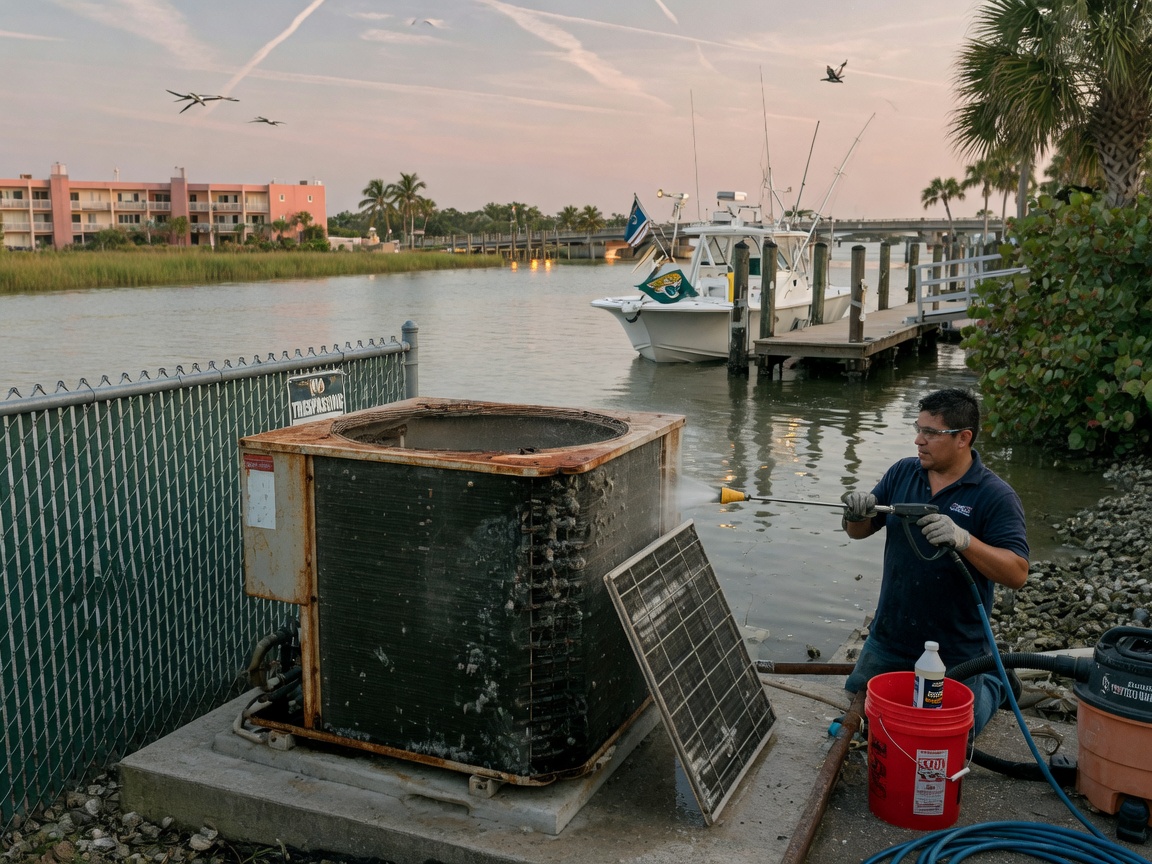
Units installed near the Intracoastal Waterway in neighborhoods such as Arlington and Mandarin face accelerated coil fouling from salt spray carried on prevailing winds. Cleaning evaporator and condenser coils every 6–12 months prevents efficiency drops of 15–30% and extends equipment life in Duval County's humid subtropical climate with hot summers and mild winters.
Salt Air Corrosion Effects on Coils
Condenser coils on rooftops or ground pads in Atlantic Beach and Neptune Beach collect a fine layer of salt crystals that mixes with the region's high humidity to form a conductive film. This film pits aluminum fins within 3–5 years if left untreated, raising head pressure and forcing compressors to run longer cycles. Older brick homes in Riverside and San Marco often have 10–15 SEER units from the 2000s whose coils sit closer to grade, collecting more debris from St. Johns River breezes. Homeowners notice higher electric bills once the coating restricts airflow across the 12–16 fins per inch typical on these systems. Regular rinsing with a low-pressure garden hose removes loose salt before it bakes on during 90-plus degree summer afternoons.
Tools and Solutions for Coastal Cleaning
Technicians use a non-acidic coil cleaner rated for marine environments followed by a freshwater rinse to neutralize residues. A soft-bristle brush and fin comb restore bent fins without damaging the 3/8-inch copper tubing found on most Jacksonville split systems. Avoid high-pressure washers that can flatten fins or drive salt deeper into the coil pack. For ground-mounted units near the waterway, elevate the pad 4–6 inches above grade to reduce splash-back during heavy rains. Always shut power at the disconnect before starting and allow the unit to dry fully before restoring operation.
Step-by-Step Cleaning Process
- Turn off power and remove the access panel to expose both sides of the condenser coil.
- Spray a diluted marine-grade cleaner from the inside out, letting it dwell 5–7 minutes to loosen baked-on salt.
- Rinse thoroughly with a hose at under 400 psi, directing water parallel to the fins.
- Straighten any damaged fins with a fin comb before reinstalling the panel.
- Run the unit in cooling mode for 10 minutes and check for unusual noises or pressure readings.
This sequence takes 45–60 minutes on a typical 3–4 ton unit serving a 1,800-square-foot home in Mandarin.
Frequency and Seasonal Timing
Perform deep cleaning each spring before temperatures climb above 85 degrees and again in late fall after pollen and salt loads peak. Homes within 1 mile of the Intracoastal often require the shorter 6-month interval because wind-driven salt accumulates faster than inland properties in Springfield or Avondale. Track runtime hours on the thermostat; once a system exceeds 1,200 hours in a season, schedule an inspection even if no performance drop is noticed yet.
Professional Support and Ongoing Care
HVAC Maintenance visits include coil inspections and can catch early pitting before replacement becomes necessary. When corrosion has already thinned fins, Air Conditioner Repair technicians can assess whether a new coil assembly or full system upgrade makes sense for the property. For readers dealing with similar salt exposure, see How Tree Pollen Affects Filters Around Oakleaf Plantation for additional filter strategies that complement coil care. Oakleaf Heating & Air LLC operates from 4623 Lambing Rd, Jacksonville, FL 32210 with hours Mon–Fri 8am–6pm and Sat 9am–2pm.