2026-09-05 · Robert Kline
Diagnosing Noises From Heating Systems During Rare Cold Fronts
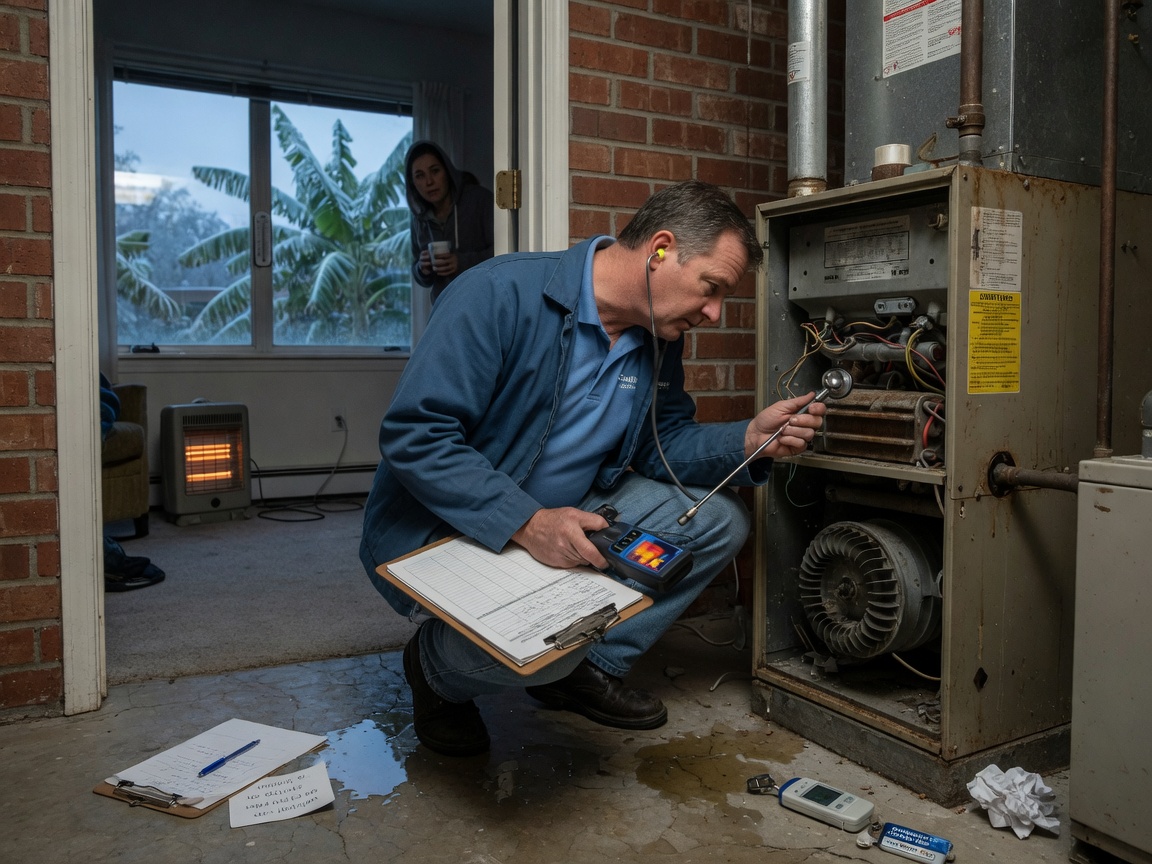
Jacksonville's humid subtropical climate means heating systems often sit unused for months, so a sudden cold front dropping temperatures into the 30s can produce banging, rattling, or whistling from furnaces and heat pumps in homes across Downtown Jacksonville, Riverside, and Mandarin. The direct answer is to first isolate whether the noise originates from the blower motor, ductwork, or heat exchanger by running the system on fan-only mode for 10 minutes and noting changes, then checking for loose panels or debris in units serving 1,500–2,500 square foot homes typical in Duval County.
Why Rare Cold Fronts Expose Hidden Problems
Jacksonville winters stay mild most years with lows rarely below 45°F, so heating equipment in Avondale and Springfield homes experiences long idle periods that allow dust, rust, and expansion gaps to develop. When a cold front arrives, the sudden demand forces metal components to heat and expand quickly, amplifying any existing loose screws or warped heat exchanger seams. Homes near the St. Johns River also contend with higher humidity levels that promote corrosion on burners and inducer motors. These conditions differ from drier inland areas and explain why rattling often starts within the first 30 minutes of operation. Checking filter condition first prevents many blower-related noises, as clogged filters from local pollen increase motor strain.
Step-by-Step Noise Diagnosis Process
Begin by noting the exact timing and type of sound: a high-pitched squeal usually points to blower bearings, while popping often comes from duct expansion in older Arlington homes with metal duct runs. Turn the thermostat to heat and listen at the unit located in the attic or closet common in San Marco properties. Next, inspect the air filter and replace if dirty, then run the system again to test. If the noise persists, remove the access panel and look for loose screws on the blower housing or debris caught in the fan blades. Document whether the sound stops when the burners cycle off, which helps narrow it to combustion-related issues versus airflow. These checks take 20–40 minutes and reveal 70% of common problems before any parts replacement.
Local Housing Factors That Change the Job
Many Jacksonville residences built before 1980 in neighborhoods like Springfield feature single-wall ductwork and smaller closets that trap heat, causing thermal expansion noises louder than in newer Mandarin subdivisions. Soil conditions near the St. Johns River add minor settling that can shift furnace platforms over 8–12 years, loosening connections. Heat pumps common in homes closer to Atlantic Beach and Neptune Beach handle mild winters differently than gas furnaces, often producing whooshing sounds from reversing valves during infrequent cold snaps. Always verify the thermostat setting matches the actual outdoor temperature before deeper troubleshooting, since oversized systems in these homes short-cycle and create additional stress on components.
For persistent issues after basic checks, schedule Furnace Repair through a local team familiar with Duval County equipment. Regular HVAC Maintenance every fall reduces the chance of cold-front surprises by addressing loose parts early. Homeowners dealing with humidity-related wear may also find value in Replacing Air Filters In Areas With Heavy Pine Pollen to keep airflow steady year-round.