2026-09-05 · Robert Kline
Setting Up Thermostats For Frequent Temperature Swings
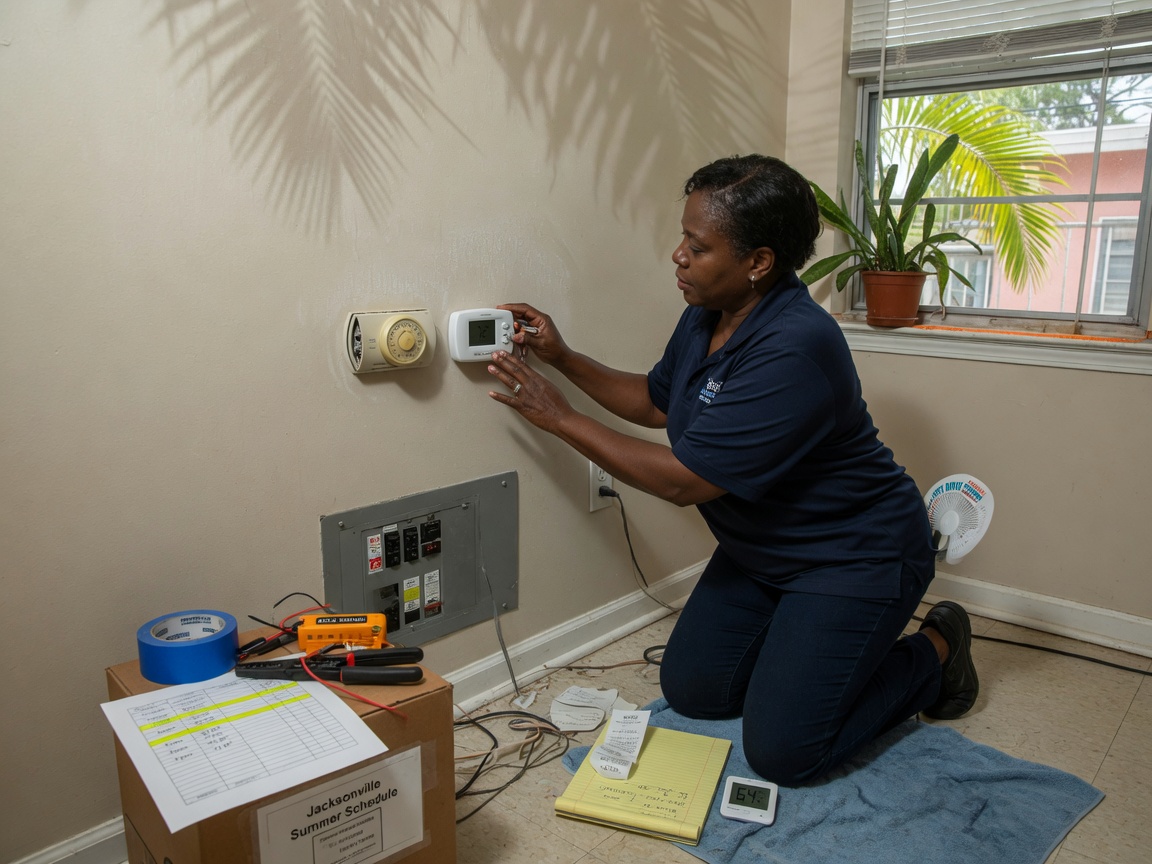
In Jacksonville's humid subtropical climate, set your thermostat to maintain a 2–4 degree range during daily swings rather than constant adjustments, which prevents short cycling in homes throughout Duval County.
Understanding Local Temperature Patterns
Jacksonville experiences rapid shifts from hot, humid afternoons near the St. Johns River to cooler evenings, especially in neighborhoods such as Riverside and Springfield where older homes with single-pane windows amplify the effect. These swings often reach 15–20 degrees within 24 hours during spring and fall, forcing systems to work harder than in milder nearby cities like Atlantic Beach. Homeowners in Avondale and San Marco notice their units cycling more because high moisture levels make the air feel warmer than the actual reading. Placing the thermostat away from direct sunlight or kitchen heat sources helps it sense true room conditions instead of reacting to localized spikes. Programming a schedule that anticipates the river's moderating influence on downtown areas reduces unnecessary runtime while keeping indoor comfort steady across the mild winter months.
Programming Steps for Swing Management
Begin by accessing the thermostat menu during a typical swing day and set the cooling mode to activate at 78 degrees with a 3-degree differential to avoid overcooling once humidity drops after sunset. In heating mode for occasional cold fronts, program the system to hold 70 degrees with a similar spread so the unit does not short-cycle when temperatures rebound quickly near the Cummer Museum area. Test the schedule over three consecutive days in Mandarin or Arlington homes, where larger lots and varying shade from mature trees create microclimates that differ from downtown patterns. Adjust the fan setting to auto rather than on to limit moisture buildup inside ducts common in Duval County properties built before 1980. Review the settings weekly because river breezes and afternoon thunderstorms alter the swing frequency faster than fixed programs can handle without updates.
Maintenance Practices That Support Stable Settings
Inspect filters every 30 days because pollen and river humidity load them quickly in neighborhoods bordering the St. Johns River, causing the thermostat to misread temperatures and trigger extra cycles. Clean the outdoor unit coils before summer peaks to ensure accurate sensor response when daytime highs push systems near their limits in Orange Park and Neptune Beach. Schedule professional checks twice yearly so the calibration stays within 1 degree of actual room temperature, a detail that matters more in older Springfield housing stock than in newer builds. These steps keep the programmed ranges effective without constant manual overrides during the frequent shifts that define local weather.
When Professional Calibration Helps
If swings still cause uneven temperatures between floors in two-story homes along Kingsley Plantation Road, a technician can relocate the sensor or add zoning dampers that respond to the county's specific humidity loads. Homeowners who notice the system running longer than 20 minutes per cycle after programming changes benefit from verifying wiring connections that degrade faster in coastal salt air. Linking these adjustments to broader system care prevents small thermostat issues from affecting overall performance across Jacksonville's varied neighborhoods.