2026-09-05 · Robert Kline
Why Coastal AC Units Short Cycle Near The Beaches
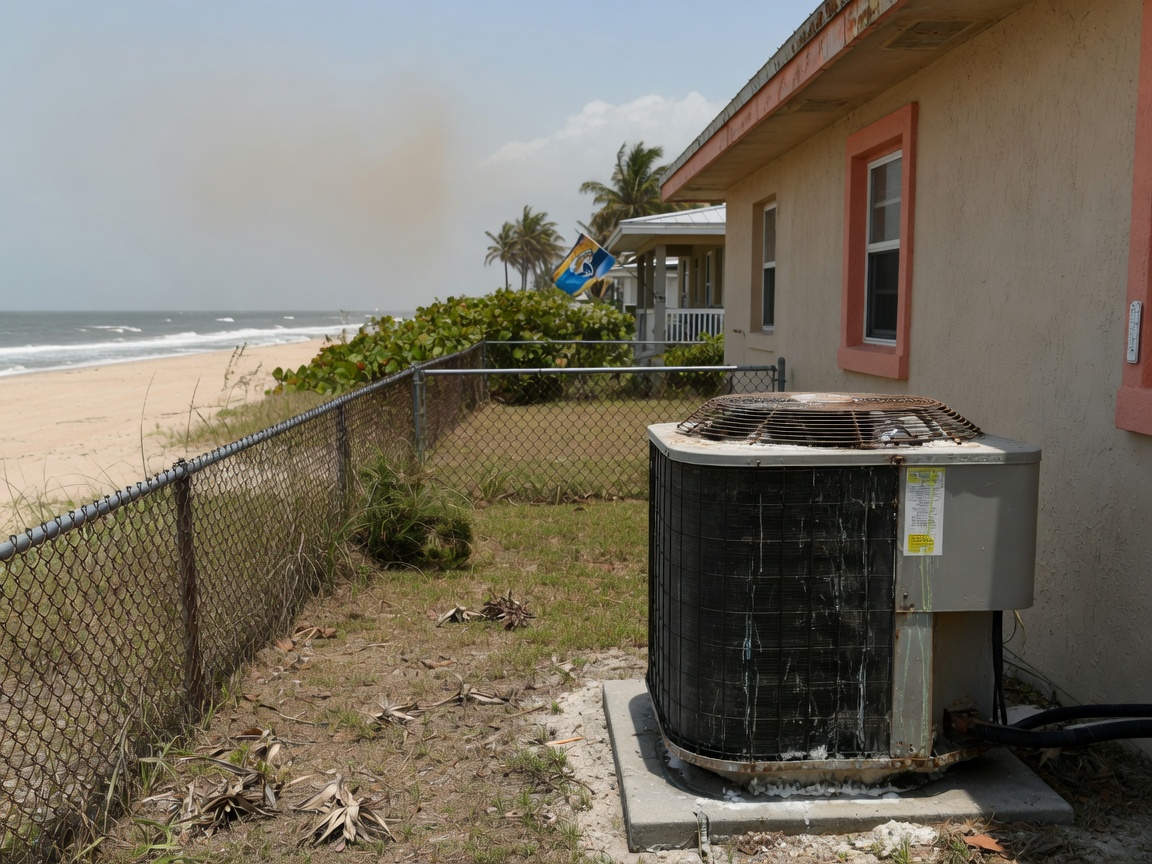
Coastal AC units near the beaches short cycle because salt-laden air corrodes coils and sensors while sea breezes create rapid temperature swings that confuse thermostats, often limiting runs to 5-10 minutes instead of the proper 15-20 minute cycles. This pattern shows up consistently in Atlantic Beach and Neptune Beach homes where humid subtropical conditions keep relative humidity above 70 percent for weeks. The St. Johns River adds extra moisture that infiltrates systems in nearby Riverside and San Marco, forcing compressors to start and stop more often than inland units in Mandarin or Arlington.
Salt Air Corrosion on Coils and Sensors
Salt particles carried inland from the Atlantic coat outdoor condensers and indoor evaporator coils within two to three years of installation. This layer reduces heat transfer efficiency and triggers high-pressure switches that shut the unit down early. In Duval County, where summer highs reach the mid-90s with constant onshore winds, the corrosion also affects temperature sensors mounted near the return air, causing the system to read the space as already cool. Homeowners notice the indoor blower running while the compressor cycles off repeatedly. Regular visual checks of the outdoor unit for white crusting help catch the issue before it leads to compressor strain. Systems installed within five miles of the shoreline require coil cleaning twice as often as those farther west in Orange Park.
Humidity Swings and Thermostat Response
Jacksonville's humid subtropical climate produces afternoon sea breezes that drop outdoor temperatures by 4-6 degrees in under an hour near Neptune Beach. The thermostat senses this drop and cuts the cooling call even though indoor humidity remains high, resulting in short cycles. Moisture lingering on the evaporator coil after shutdown then re-evaporates into the air, raising humidity again and restarting the process. In multi-level homes near the water this effect intensifies on upper floors where warm air pools. Linking a dehumidification mode or upgrading to a two-stage compressor can stretch run times. Residents in Springfield and Avondale report the same pattern when afternoon storms pass through and leave behind elevated moisture levels.
Airflow Restrictions in Older Coastal Housing
Many homes built before 1980 in Atlantic Beach and along the St. Johns River have ductwork routed through humid crawl spaces or unconditioned attics. Salt and moisture combine to create mold on insulation and restrict airflow, which raises static pressure and causes the safety limit switch to trip. Restricted return air in Riverside bungalows commonly shortens cycles by forcing the evaporator to freeze over partially. Checking filter condition monthly and sealing duct joints with mastic prevents these restrictions. Proper sizing of new systems accounts for the higher latent loads present this close to the coast, unlike inland installations in Mandarin where drier air allows longer run times.
Practical Maintenance Steps for Local Systems
Schedule coil cleaning and electrical inspections every six months for units within three miles of the beach. Replace filters with MERV-8 or higher ratings to capture salt particles before they reach the blower. Verify that condensate drains remain clear, as standing water promotes corrosion on the drain pan and nearby sensors. In homes near EverBank Field or Downtown Jacksonville the same practices apply but with less salt exposure. Keeping the thermostat set two degrees higher during peak humidity hours reduces unnecessary short cycles while still maintaining comfort. These steps extend equipment life without requiring full replacement.
When Professional Diagnosis Becomes Necessary
If short cycling persists after basic filter and coil cleaning, the next step is measuring refrigerant charge and testing sensor calibration. Technicians can check for low airflow caused by collapsed flex duct in older San Marco homes or confirm whether the reversing valve in a heat pump model is sticking. For persistent issues, air conditioner repair addresses sensor and control problems while HVAC maintenance prevents recurrence. Readers dealing with ongoing humidity challenges can also review Managing High Humidity Levels With Home Cooling Systems for additional strategies tailored to Duval County conditions.